Banking sector returns to sorry state again
Banking sector indicators have fallen further in June due to rise in gross non-performing loans (NPLs) and shortfall in actual provisioning maintained by the sector.
Bangladesh Bank, in its quarterly review released early this week, expressed concern over the weakening performance by the banks, mainly the state-owned ones having major portion of the NPLs.
After showing a noticeable improvement in December, the banking indicators faced setback again in the last two quarters.
An abnormal increase in NPLs pushed the indicators down, said a senior executive of the central bank, reports the Dhaka Tribune.

Bangladesh economy progressing, but below potential

Bangladesh continues to make progress on human development and reducing extreme poverty. Political uncertainty and weak competitiveness are dragging acceleration of private investment and growth. To sustain growth in the near- and medium-term, private investment need to increase significantly along with improving the quality of public investment.
 The Bangladesh Development Update October 2014 notes that the economy is gradually recovering from prolonged disruptions, aided by political and macroeconomic stability. The challenge now is to consolidate this ...
 The Bangladesh Development Update October 2014 notes that the economy is gradually recovering from prolonged disruptions, aided by political and macroeconomic stability. The challenge now is to consolidate this ...
BB governor urges clarity on Green bonds, projects
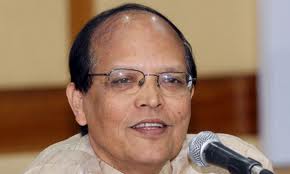
Bangladesh Bank (BB) Governor Dr Atiur Rahman has urged the global stakeholders to create clear and standard definitions on ‘green projects and green bond.’
He observed that there is no clear and standard definition yet on the two concepts.
“So, before getting into the Green Bond approach, we should reach some sort of consensus in cautious manner in defining Green Bond and its principles and methodology,” he said, while participating in the panel discussion on ‘Green Bond for Water’ at the Global Green Growth Forum 2014 in Copenhagen, Denmark Tuesday, reports UNB.

Domestic trade: Demand on the rise, says WB
Retail trade in the domestic market of Bangladesh was upto $12 billion during the two Eid festivals this year, the World Bank said today underlining that the internal demand of the country is on the rise.
The observation came up during the release of a report on Bangladesh development update this morning at a press conference organised at the World Bank’s Dhaka office.
“The GDP growth in the running 2014-15 fiscal is 6.2%, which was 6.1% in the last fiscal,” said Zahid Hussain, lead economist in the World Bank’s South Asia Finance and Poverty group.

NBR rolls out scheme for tax returns e-filing
Taxpayers will be able to file their tax returns online in the next fiscal year, the National Board of Revenue said yesterday.
“As a citizen, you will no longer need to visit us to file your tax returns,” NBR Chairman Md Ghulam Hussain said at a press briefing, organised to announce the e-filing scheme.
The move, the revenue authority said, will enhance transparency and accountability in tax filing and ensure higher compliance.
Currently, less than 1 percent of the population pays income tax regularly, although the NBR is of the belief that the country has 60 lakh people with taxable incomes. Of them, nearly 15 lakh have TINs now.

Bangladesh Business Forecast Report Q4 2014
Bangladesh will benefit from the power struggle between China and India for dominance of South Asia and the Indian Ocean, as the two giants will want to strengthen their political, economic and defence cooperation with Dhaka. This bodes well for Bangladesh's long term economic growth, which we are forecasting to come in at an annual average rate of 6.3% over the next 10 years.
With the return of political normalcy, we are optimistic that investment and export sector growth will start to pick up over the coming quarters, and are forecasting real GDP growth of 6.3% in FY2014/15.
Bangladesh Bank is expected to keep its REPO rate unchanged at 7.25% in H1FY15 (July-December), as inflation will likely remain relatively benign, while the economy should recover from the recent political t...