We know that EU rules can all too often thwart firms’ best efforts to grow their business and to create new jobs. The UK has not been shy in pushing for the change that is long overdue and we have led the debate in Europe about reducing the burden on business.
That’s why, as part of our long term economic plan, I set up a taskforce of British business leaders in 2013 to look at the kind of reforms that we need to sweep away poorly-understood and ineffective rules and do away with the creep of similarly pointless regulation in the future.

That tas...
The world faces an alarming shortfall of funding needed to transform global health. If the world is to end preventable child, adolescent and maternal deaths, we need new forms of development finance to close a $33.3 billion annual funding gap.
A new financing platform announced this week at the Conference on Financing for Development in Addis Ababa, Ethiopia aims to do just that. The Global Financing Facility (GFF) is a country-driven financing partnership to accelerate efforts to end preventable maternal, newborn, child and adolescent deaths by 2030.
[caption id="attachment_18232" align="alignright" width="504"]

Historically, the path to wealth for nations has run through manufacturing. Manufacturing gives you a way to quickly move a lot of people from low-productivity farming to higher-productivity jobs without requiring that they pick up lots of new skills first. And the garment industry fits the bill admirably; it does not not require lots of expensive infrastructure or a skilled population that can supply and maintain fancy machines, and it does use lots of low-skilled labor. Once you get people through the factory gates, their higher productivity and earnings will support improvements in infrastructure, education and services, that can fuel further growth. Eventually, one hopes that your country will get too rich to support much garment manufacturing, because workers will be able to comman...
The slow unfolding of the sustainable development goals continued last month with the unveiling of the zero draft that will be negotiated in the runup to the summit in New York in September.
How does the draft of 17 goals look from the perspective of an organisation dedicated to helping countries to strengthen democracy? The answer is not bad, but not good.
[caption id="attachment_17757" align="alignright" width="576"]
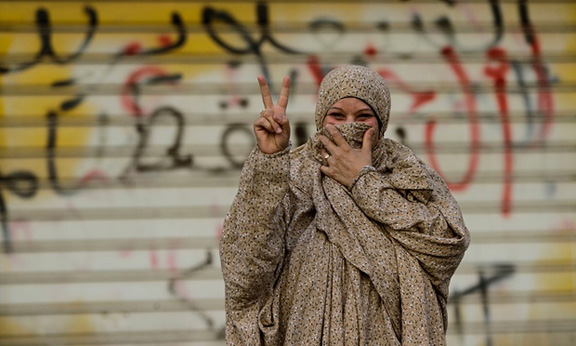
A Bahraini pro-democracy protester gestures in front of a wall sprayed with anti-government graffiti. Photograph: Hasan Jamali/AP...
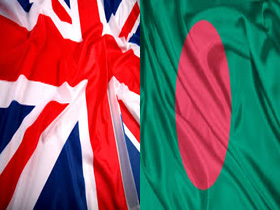
Bangladesh has been a focus of attention of the international community for some time. On 30 April 2015 the US Congressional Subcommittee on Asia and the Pacific held a hearing on ‘Bangladesh’s Fracture: Political and Religious Extremism.
Less than two months later a parliamentary debate was held in the House of Commons where a number of common themes were once against addressed.
On 17 June 2015, the Parliamentary debate, chaired by Sir Alan Meale and led by Anne Main MP, was held on the issue of Bangladesh and the country’s volatile future. Members of Parliament attended the debate from the Labour Party, the Labour and Co-operative Party, the Conservative Party and the Scottish National Party. Speakers focused on the positive aspects of Bangladesh’s recent development, but issued...
Indian Prime Minister Narendra Modi’s two-day state visit to Bangladesh ended with renewed hopes both in Dhaka and New Delhi for an improved relationship between the two neighbors. Although the long-awaited water share treaty over the common river Teesta saw little progress, Modi gave Dhaka hope for a future peaceful resolution. Sheikh Hasina’s government is keeping the faith in Modi, as evidenced by the Bangladeshi prime minister only vaguely mentioning the issue during a joint press conference so as to avoid embarrassing her Indian counterpart. And for the time being, Dhaka can still afford to be patient, thanks to Modi’s apparent willingness to build a meaningful partnership with Bangladesh. For it was no small feat in getting India’s parliament to finally pass the Land Border Agreem...