In recent times, BIMSTEC (the Bay of Bengal Multi-Sectoral Technical and Economic Cooperation), an economic grouping comprising of Bangladesh, Bhutan, India, Myanmar, Nepal, Sri Lanka and Thailand as member countries, is gaining importance. The initiative for this economic cooperation was undertaken during 1997.
 BIMSTEC was formed with the idea of imparting greater socio-economic cooperation among the member nations in the area of technology, transport and communications, energy, tourism, agriculture, fisheri...
Let the speech be free in Turkey

Though the Turkey’s President Recep Tayyip Erdogan claimed that his country has the freest press in the world, but according to the International Committee to Protect Journalists, a global press freedom organization, Turkey was the world’s top jailer of journalists in 2012 and 2013, ahead of Iran and China.
 Erdogan on Friday brushed off accusations that media freedoms were being ero...
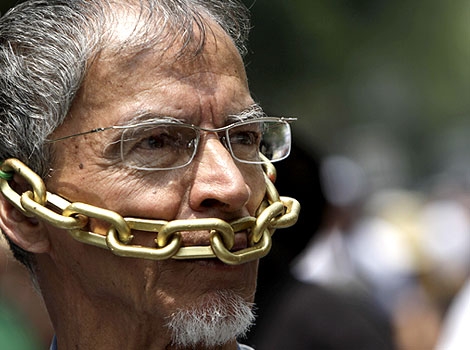 Erdogan on Friday brushed off accusations that media freedoms were being ero...
Who recognised Bangladesh first?

Bhutan’s recognition of Bangladesh without waiting for Indian advice was a clever move. It was a calculated gamble to assert its independence, says Ambassador T P Sreenivasan.
Thimphu, the capital of Bhutan had very few comforts in 1971. For us, who went to Bhutan from Tokyo, with a nine-month old baby 42 years ago, the feeling was that we had walked backwards in time by about half a century. The first motorable road was opened only in 1968 and there were no commercial flights into Bhutan. The drive from the border town of Phuntsholing in India to Thimphu took the whole day, with a lunch break at Chukha, a small rivulet at that time, but a gigantic hydro-electric project now. Electricity was a rarity and we had to huddle around a bukhari, which bu...Global conflicts to watch in 2015

Foreign policy often involves making difficult and debatable choices about which parts of the world matter more to a given country—and which, by extension, matter less. It’s about defining national interests and determining where those interests are most evident and endangered. This is why the United States has done far more to stop ISIS in Syria and Iraq than, say, sectarian war in the Central African Republic.
In short, it’s about priorities. And according to a new survey of U.S. foreign-policy experts and practitioners, those priorities could look a lot like the map above in 2015, at least from America’s point of view. The map sorts potential conflicts around the world into three tiers of risk: red for high-priority threats, orange for moderate-priority threats, and yellow for low...
Organizational ego is eating trust

I had reason to visit the International Monetary Fund website recently. Based on its content, the IMF is an organization overflowing with ego. Dominating the homepage was IMF chief Christine Lagarde with a very large picture of herself. In imperious language we are told that Lagarde “welcomes the pledge by the G-20 group of advanced and emerging economies to step up efforts to boost growth and create jobs.”
 This archaic, royalist, pre-modern language is so out of step with the world of social media. It is not exceptional. If you visit, for example, t...
 This archaic, royalist, pre-modern language is so out of step with the world of social media. It is not exceptional. If you visit, for example, t...
Saving Grameen Bank, sustaining the Bangladesh paradox

Bangladesh today is a global poster child within the Muslim world for women’s development. When it comes to gender equality, it ranks above all South Asian countries and Muslim-majority nations in Asia. The Bangladesh gender paradox – superior status of women despite a patriarchal social structure and strong influence of religion – owes to another paradox: Health conditions and economic participation of women have improved over the last twenty years despite limited public investment in social sectors.
 At a time when women’s developme...
At a time when women’s developme...