Asma Khalid
 Bangladesh’s interim leader Muhammad Yunus concluded a four-day visit to China last month, marking his first state visit since assuming office. Significantly, he chose to be in Beijing on Bangladesh’s independence day.
During his trip, Beijing committed to US$2.1 billion in investments, loans and grants, including US$400 million to modernise Mongla Port and US$350 million to develop an industrial zone to host Chinese manufacturing and boost Dhaka’s capacity. Yunus also sought Chinese support to advance Bangladesh’s textile, pharmaceutical and renewable energy sectors.
Hasina had helped strengthen India’s access to its northeastern states and the Bay of Bengal. In November 2023, Indian Prime Minister Narendra Modi attended the inauguration of two rail links that India had helped fund – Akhaura-Agartala and Khulna-Mongla Port. The former, which passes through Bangladesh, cuts travel time between two Indian cities, Agartala and Kolkata, from 31 to 10 hours, bypassing the congested Siliguri Corridor.
These links bolster their economic and strategic ties, enable smoother military and trade transits, and make Bangladesh India’s top subcontinental trading partner.
A key shortcoming of the rail and road links is that they primarily connect Bangladesh to the Indian economy without facilitating broader regional connectivity. Bangladesh remains largely disconnected from Southeast Asian markets.
To India’s credit, it has tried to develop the India-Myanmar-Thailand Trilateral Highway, but the project has encountered delays due in large part to Myanmar’s instability and security issues in India’s northeastern states. The exit of pro-India leader Hasina may dampen India’s push to include Bangladesh in the project.
China’s approach to investments and economic engagements typically transcends political alliances, and it possesses ample financial resources to invest in regional infrastructure projects, including railways and roads.
China can play a pivotal role in three key areas, addressing Bangladesh’s need to extend its connectivity with Southeast Asia and the rest of the Indo-Pacific.
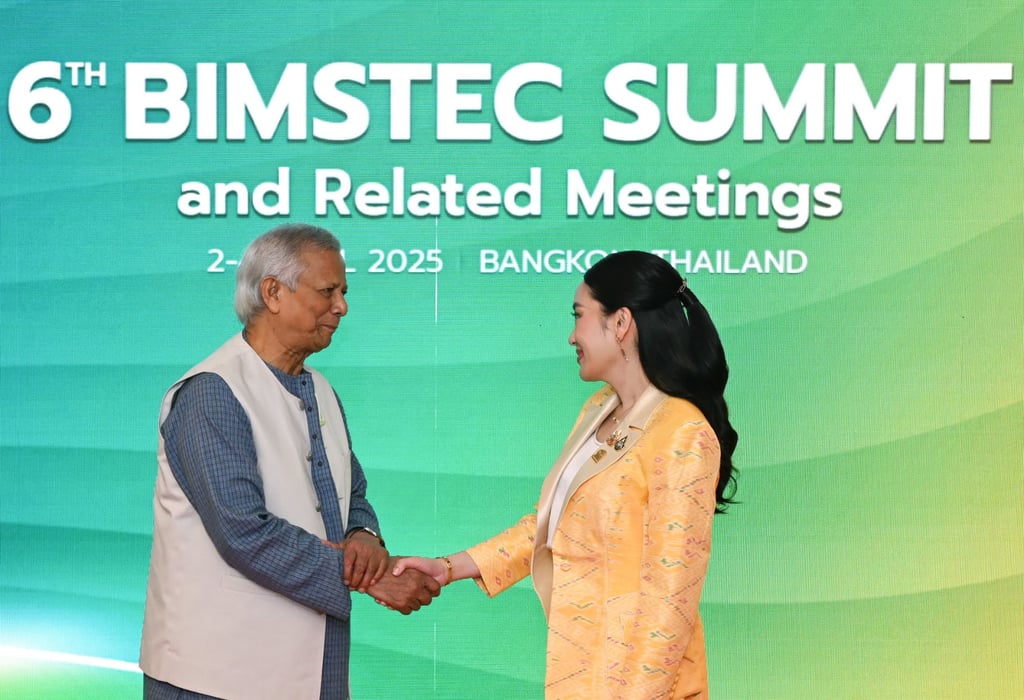
The second area in which China can play a pivotal role is in Bangladesh’s bid to become a sectoral dialogue partner of the Association of Southeast Asian Nations. This status would allow Bangladesh to engage with the Association of Southeast Asian Nations in sectors such as trade and security. Bangladesh, which has been lobbying for this since at least 2017, last year redoubled its efforts to seek support from Asean members. China, an ASEAN dialogue partner, can lobby Malaysia, the 2025 ASEAN chair, to back this bid.
For Bangladesh to integrate with Southeast Asia and the rest of the Indo-Pacific, it requires not just China’s help but also domestic reforms to address structural vulnerabilities.
To remain competitive post-LDC graduation, Bangladesh must diversify its exports, invest in upskilling its labour force and upgrade its industrial infrastructure. Streamlining trade logistics, ensuring product compliance with global standards and attracting foreign direct investment in non-traditional sectors are equally vital.
These steps, alongside RCEP accession, would help Bangladesh withstand regional competition and anchor its economy more firmly in Southeast Asia’s dynamic trade architecture.
Asma Khalid is an independent researcher and former visiting fellow at the Stimson Center. Her areas of interest are nuclear politics and security issues of South Asia. Courtesy: SCMP